


Accelerating the next generation of rabbit biocontrol
Rabbit numbers are rising again across Australia, and new investment in biological control is urgently needed to reduce their growing impact on agriculture, the environment and communities.
Across the country, rabbit numbers are rebounding as the effectiveness of existing control tools declines. Even at relatively low densities, rabbits cost Australian agriculture more than $200 million every year and place significant pressure on native ecosystems and threatened species. Without new tools, these impacts will continue to increase.
To address this challenge, CISS is working with CSIRO and national partners to progress the RHD Accelerator project, a major step forward in the development of future rabbit biocontrol options.
CSIRO will lead the scientific research, which uses a breakthrough laboratory platform to grow and test rabbit organoids (miniature organ-like cell cultures). This technology will allow researchers to identify and assess promising new variants of rabbit haemorrhagic disease virus (RHDV) in controlled conditions, rather than waiting for suitable strains to emerge naturally overseas. By enabling faster screening and comparison of potential candidates, the RHD Accelerator has the potential to significantly shorten the early stages of virus development.
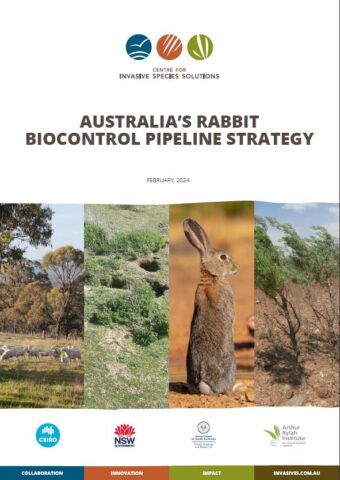
The project directly advances Australia’s Rabbit Biocontrol Pipeline Strategy, developed by CISS in partnership with Australian governments and leading research organisations, including CSIRO, NSW DPIRD, Arthur Rylah Institute and PIRSA and others. It identified the need to release new rabbit biocontrol agents every 10 to 15 years to maintain landscape-scale suppression, recognising that resistance and immunity build over time in rabbit populations.
Initial support from the Australian Government Department of Agriculture, Fisheries and Forestry and Meat & Livestock Australia enabled preliminary work to begin and maintain research continuity. However, this funding concludes in mid-2026.
CISS, together with CSIRO, is now working to secure co-investment for the next critical phase of research, estimated at approximately $3 million over three years. This phase will determine whether suitable virus candidates can be identified as potential future biocontrol agents, with a clear go or no-go decision at its conclusion.
If the decision is to proceed, further years of development, testing, regulatory approvals and national deployment planning be required. Given the current resurgence in rabbit populations, progressing this work now is both timely and urgent.
Biological control has historically delivered some of Australia’s most effective and cost-efficient reductions in rabbit impacts. The RHD Accelerator represents an important opportunity to keep that pipeline moving and ensure future generations have the tools they need to manage one of the nation’s most persistent invasive species challenges.