


National workshop sets priorities for coordinated wild dog management
With current funding for the National Wild Dog Action Plan (NWDAP) National Wild Dog Management Coordinator due to conclude in 2026, CISS recently convened a national workshop in Canberra to identify priorities for the next five years of the Plan’s implementation and to support a coordinated, evidence-based approach to managing wild dog impacts across Australia.
The workshop brought together producers, livestock industry bodies, government agencies and technical experts to clarify long-term outcomes, identify nationally significant constraints and confirm the activities needed to sustain effective national collaboration.
A proven national model
The National Wild Dog Action Plan was established in response to strong concern from livestock producers and regional communities about the negative impacts of wild dogs and the need for a coordinated, best-practice approach across property, jurisdictional and tenure boundaries.
Developed collaboratively by industry, governments, technical experts and community representatives, the Plan provides a nationally consistent framework to support best-practice, evidence-informed management while enabling delivery at local and regional levels.
The NWDAP recognises the complexity of wild dog management and the need to balance agricultural, environmental, community and First Nations considerations. Its focus is on targeted, humane and proportionate management that reduces negative impacts while supporting animal welfare, biodiversity outcomes and public confidence.
Independent reviews show the national wild dog coordination program delivers substantial economic value. An investment of approximately $2.6 million between 2014 and 2019 generated estimated benefits of $16-43 million.
Independent reviews have also highlighted the broader benefits of national coordination, including consistent management across boundaries, stronger collaboration between landholders and agencies, improved confidence in policy settings and access to effective tools, and reduced stress and uncertainty for land managers who are managing ongoing impacts.
The National Wild Dog Management Coordinator role has been central to maintaining this collaboration, continuity and national alignment.
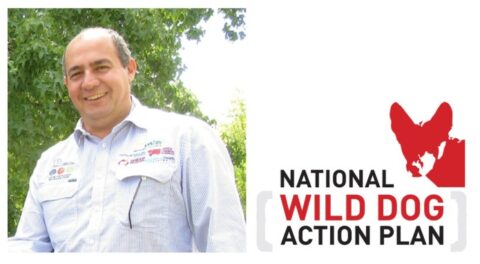 Greg Mifsud is the National Wild Dog Management Coordinator.
Priorities for the next phase
Workshop participants confirmed strong support for continuing national coordination and identified four key outcomes for the next phase:
- minimising the economic, animal welfare and social impacts of wild dogs on agriculture and rural communities
- strengthening knowledge, skills and capacity across land managers
- targeting resources where they deliver the greatest impact
- maintaining public confidence and social licence through best-practice, humane and evidence-based management.
Priority activities include improved data and evaluation of impacts, targeted training and extension, strengthened communication and continued alignment with industry and government strategies.
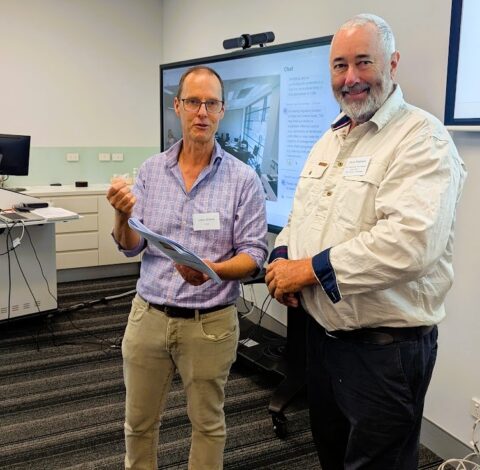
Dr John Virtue, Director of Research, Development and Extension CISS and Chris Patmore, Chair of National Wild Dog Action Plan.
The pathway forward
There was broad agreement that the core activities required are well understood. The key challenge is maintaining continuity and scale through longer-term investment to support the National Wild Dog Management Coordinator role.
Workshop participants supported the development of an industry-led proposal for multi-year funding, with proposed contributions from industry and government and support from delivery partners.
The workshop confirmed strong alignment across industry, government and technical stakeholders on the importance of continuing national coordination.
CISS is now working with partners to develop a prospectus that reflects shared priorities and supports long-term, coordinated management of wild dog impacts across Australia.