


Weed biocontrol network for drought resilience
Now well into its first year, CISS is leading the Australian Government’s $5.9 million Future Drought Fund Weed biocontrol network for drought resilience project.
It harnesses nine biocontrol agents to tackle seven of Australia’s most invasive rangeland and aquatic weeds via a consortium of leading Australian weed biocontrol experts from CSIRO, Queensland Department of Primary Industries, Agriculture Victoria and NSW Department of Primary Industries and Regional Development.
The project is progressing ahead of plan, with over 34,000 agents already released at 160 sites. It also includes strong capacity-building achievements, like the successful development of an online data collection system.
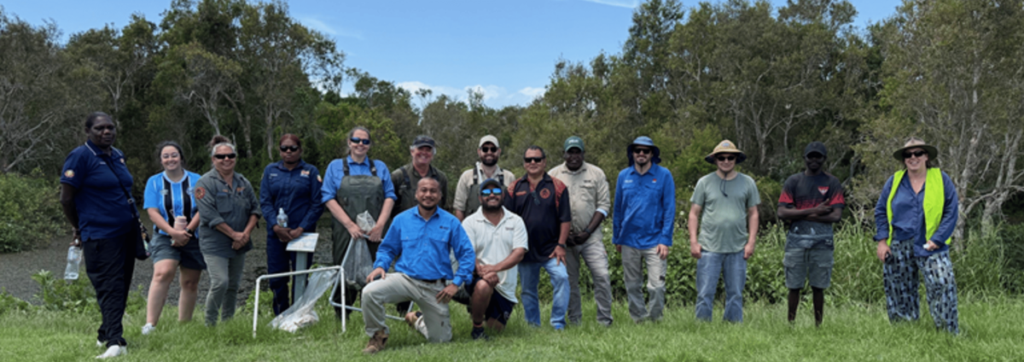
Capacity-building also includes training 11 Indigenous Rangers for ongoing biocontrol agent release work. One example was a workshop at Byron Bay wetlands for personnel from NSW DPIRD, NT Government, Parks Australia, Djurrubu Rangers, Malak Malak Rangers and consultants working to tackling an aquatic Weed of National Significance, salvinia, using the Cyrtobagous salviniae weevil.
Its larvae feed on developing fruiting heads and at high densities, cause significant losses in seed output and viability. With this training in place, the Indigenous Rangers will be returning to the Northern Territory to commence control work for this weed species in the World Heritage-listed Kakadu National Park.
The project’s early success was shared on the world stage last month as Senior R&D Coordinator, Maree Wright, presented on the project at the XVII International Symposium on Biological Control of Weeds in Rotorua, New Zealand. The project will also feature at the Australasian Weeds Conference this August.