


Rust fungus vs African boxthorn
As part of the Australian Government’s $5.9 million Future Drought Fund Weed biocontrol network for drought resilience project, led by CISS, researchers are deploying nature’s own tools to fight some of Australia’s worst weeds.
Here we spotlight the biocontrol work being done by CSIRO and Agriculture Victoria on African boxthorn (Lycium ferocissimum).
African boxthorn is a thorny invasive shrub that displaces native vegetation, hampers access to agricultural land and waterways and provides shelter for pest animals.
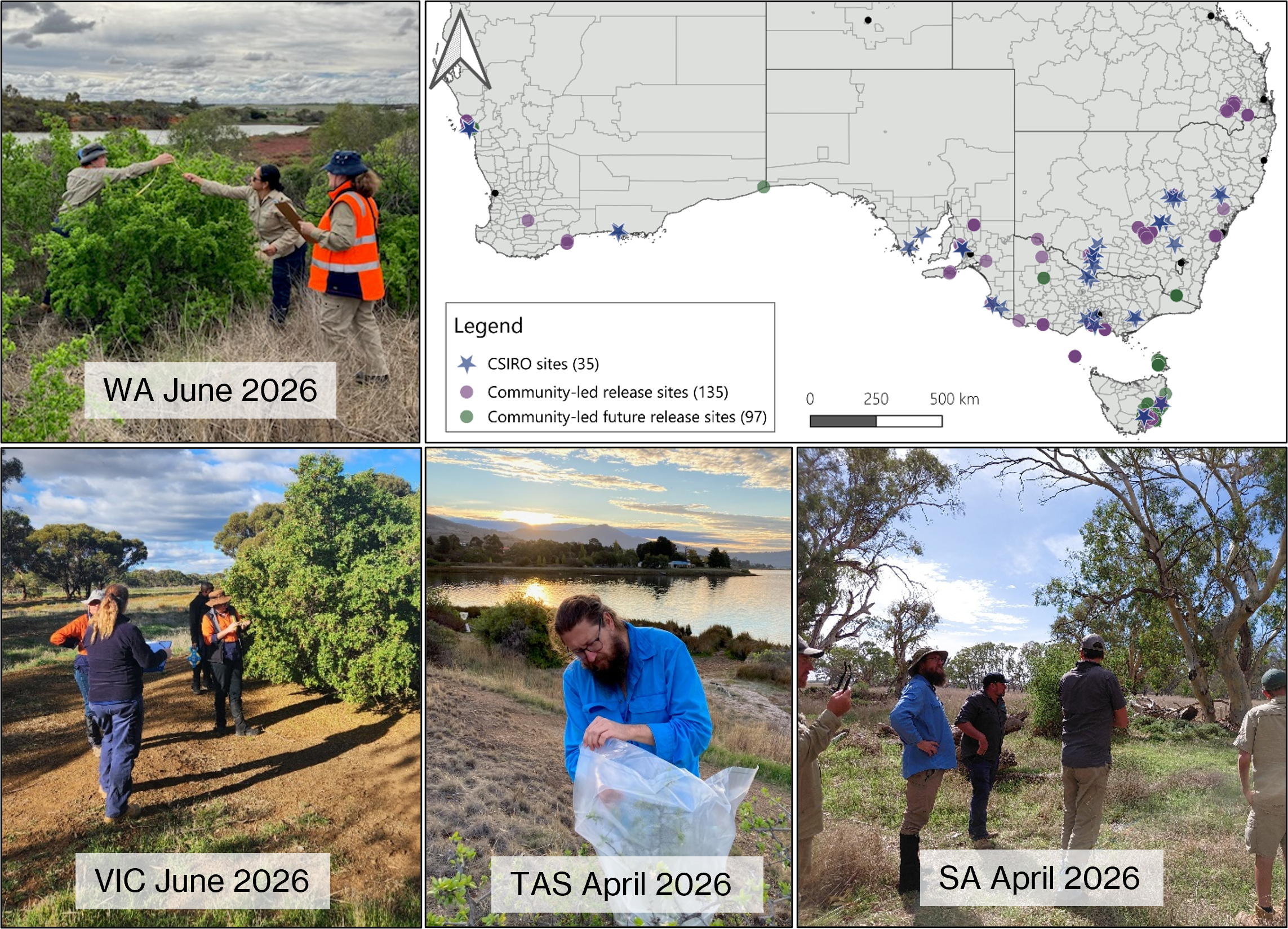
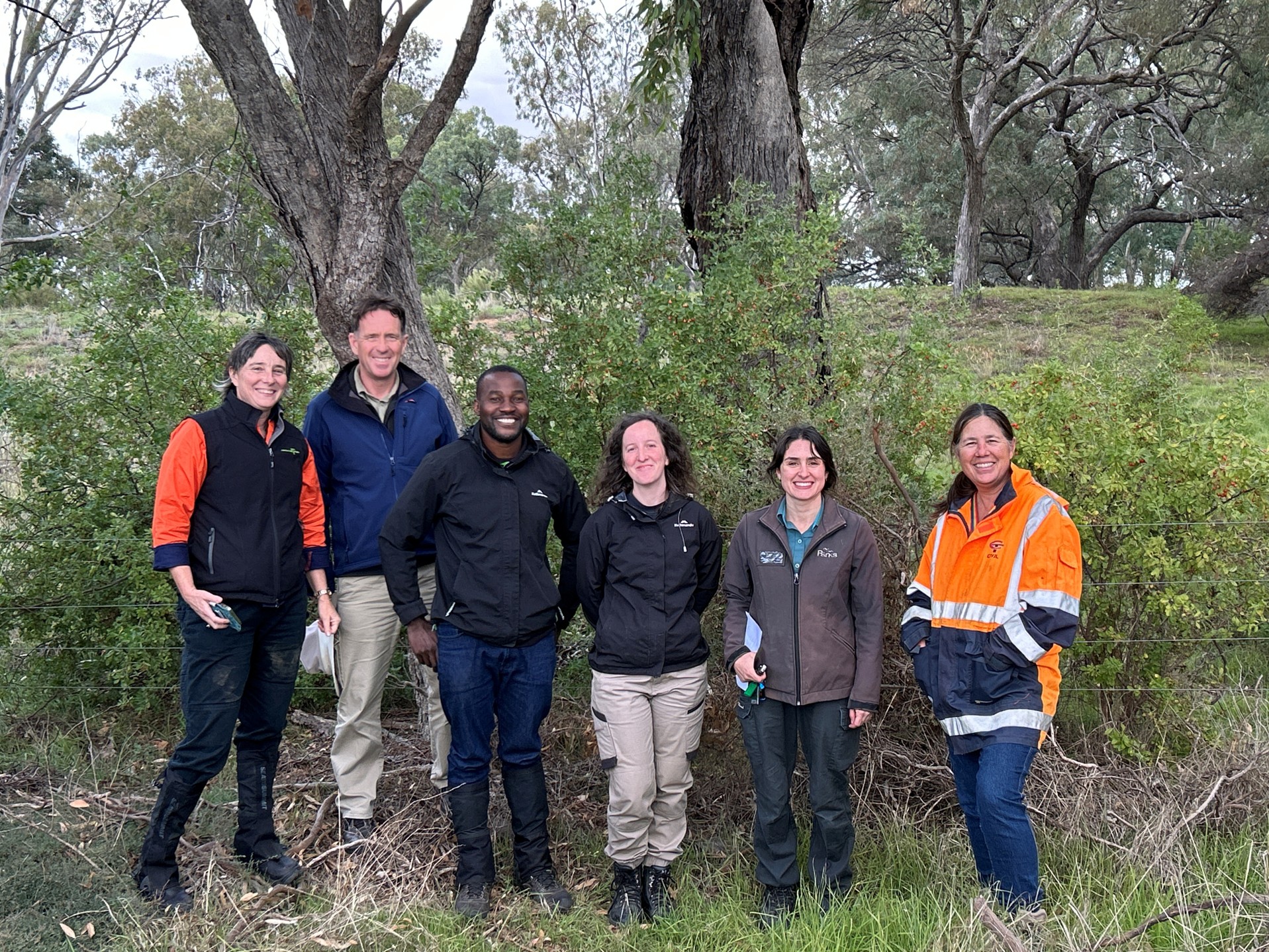
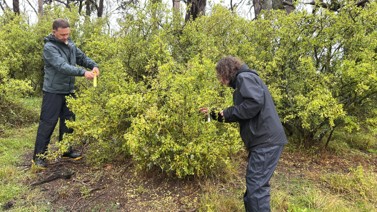
The biocontrol agent: Puccinia rapipes, a rust fungus, infects African boxthorn leaves, causing yellow flecking that develops into pustules before spores are released to infect new plants, with infected leaves dying off within a few weeks.
The project results achieved so far on African boxthorn speak for themselves:
-
- 44 release and monitoring sites
- 241 biocontrol release kits distributed
- 436 stakeholders reached
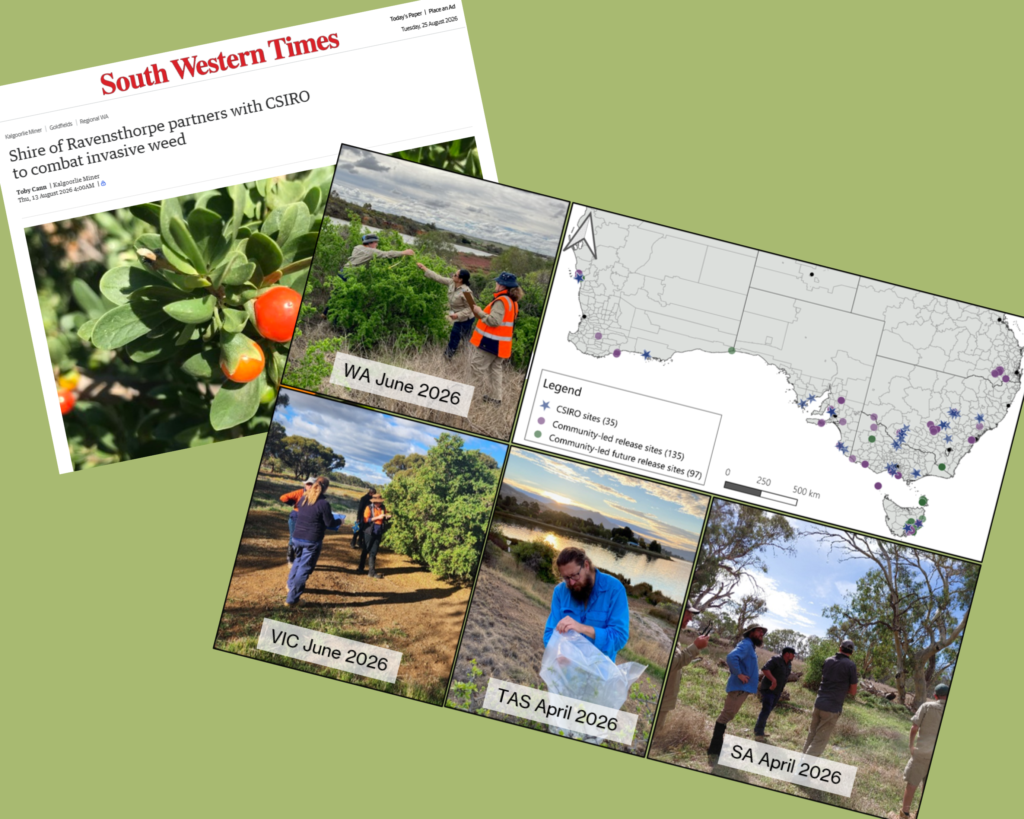
Release of the rust fungus commenced this autumn, following significant interest expressed by landholders as part of a CSIRO-led outreach program. Landcare Tasmania is a key partner in this work, and release and monitoring sites have now been identified across the country.
The project has also attracted media attention on the other side of the country, with work underway with both the Shire of Ravensthorpe and the City of Greater Geraldton to combat African boxthorn in Western Australia.
CSIRO’s team has been central to driving this work, combining rigorous science with on-ground delivery across multiple jurisdictions.
To get involved please contact Caroline.Delaisse@csiro.au or boxthornbiocontrol@csiro.au